
Sequential Numbering on Invoice Books: Why It Matters for UK Businesses
Sat, Aug 8, 2026
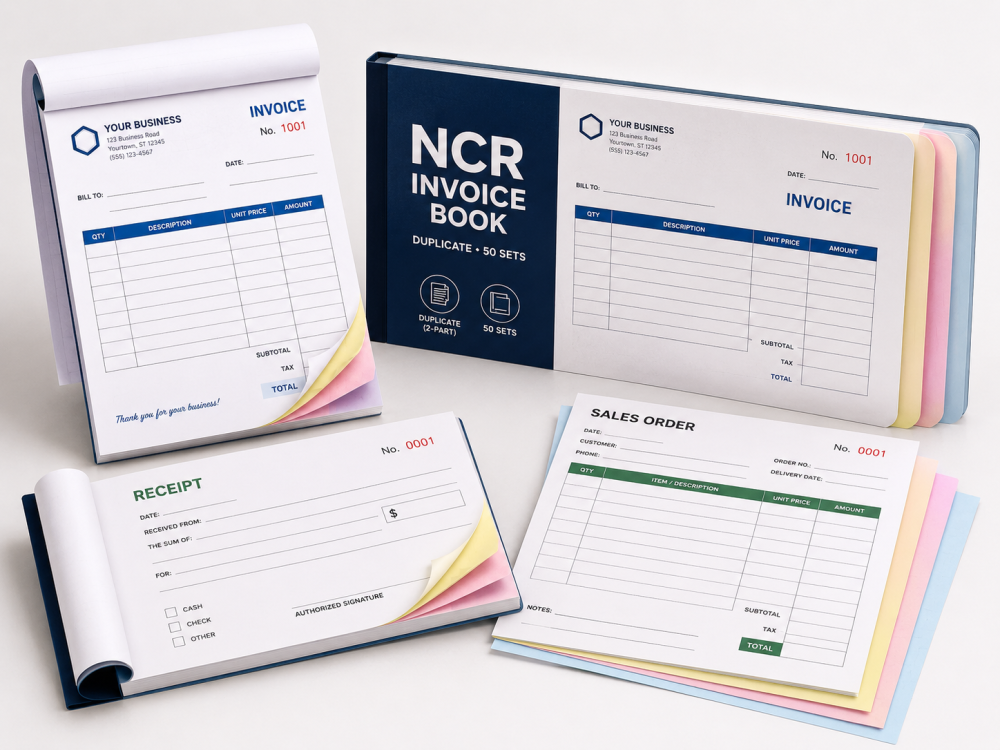
Sequential numbering sounds like a minor detail. In practice, it’s one of the most useful features you can add to any invoice pad or job sheet book — and at £15 per order, one of the most cost-effective.
What Is Sequential Numbering?
Each form in your pad or book carries a unique printed number — 0001, 0002, 0003, and so on. You specify the starting number when you order. When your pad runs out, your next order continues from where the last left off, maintaining an unbroken sequence.
For VAT-Registered Businesses — It’s a Requirement
HMRC requires VAT invoices to carry a unique sequential number. Every invoice must have one, and those numbers must be in sequence. Pre-numbered NCR invoice books satisfy this obligation automatically, without you having to think about it each time.
For Chasing Payments
“Please settle invoice 0247 dated 14 March” is a professional, unambiguous communication. “The invoice I sent you a few weeks back” is not. Numbered invoices make payment chasing faster, clearer, and more effective.
For Resolving Disputes
“I never received an invoice for that” is a common response from customers wanting to delay payment. A sequentially numbered invoice, matched against your records and the customer’s copy, removes the ambiguity entirely — you can show exactly when it was issued and what it covered.
For HMRC Inspections
Sequential records demonstrate complete, unaltered paperwork. Gaps in a numbering sequence raise questions. A clean run from 0001 to 1000 raises none of them. It simply shows a well-run business.
The Cost: 30p Per Set
Sequential numbering adds £15 to any order. On a standard pad of 50 sets, that’s 30p per set — for a feature that protects every job you do, satisfies HMRC requirements, and saves time on every payment chase. Specify your starting number at checkout and we’ll print the sequence in the position that works best for your form layout.